

Recipe ID
About Recipe ID
- A recipe ID usually corresponds to the recipe file path. It is very useful when checking recipe type and format during development.
- Common use cases include removing recipes, overriding recipes, and using
custom. - After installing
JEI, enable advanced tooltips withF3+Hand you can view recipe IDs in-game.

- In JEI, open any recipe and hover the output to view the recipe ID.
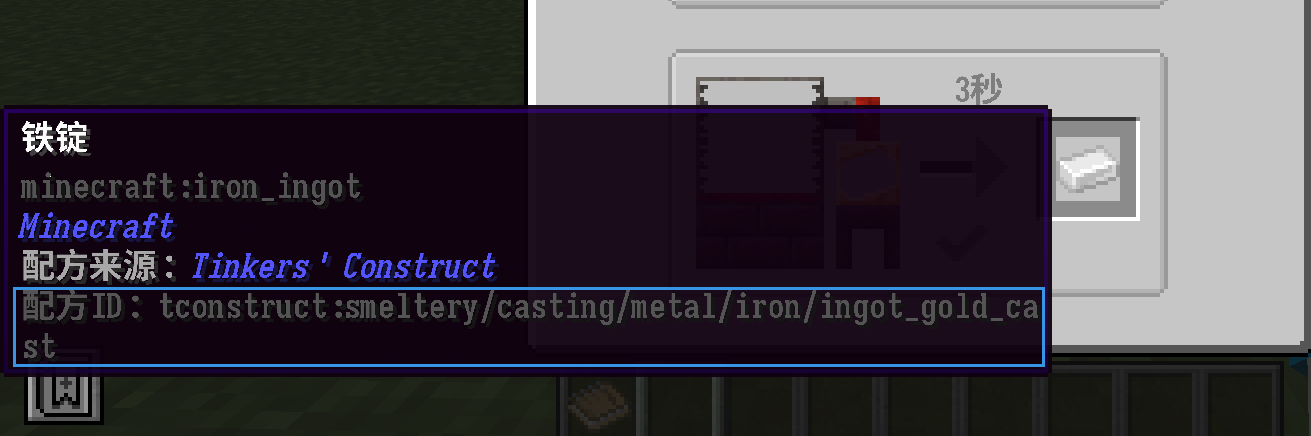
- From the iron casting example above, the recipe ID tells us the file is
ModFile.jar/data/tconstruct/recipes/smeltery/casting/metal/iron/ingot_gold_cast.json. - JEI provides a keybind for copying recipe IDs. Configure it yourself (no default key is bound).

REIandEMIcan do similar things, but this tutorial only coversJEI. If you useREI/EMI, check mod settings for their keybinds.
Example
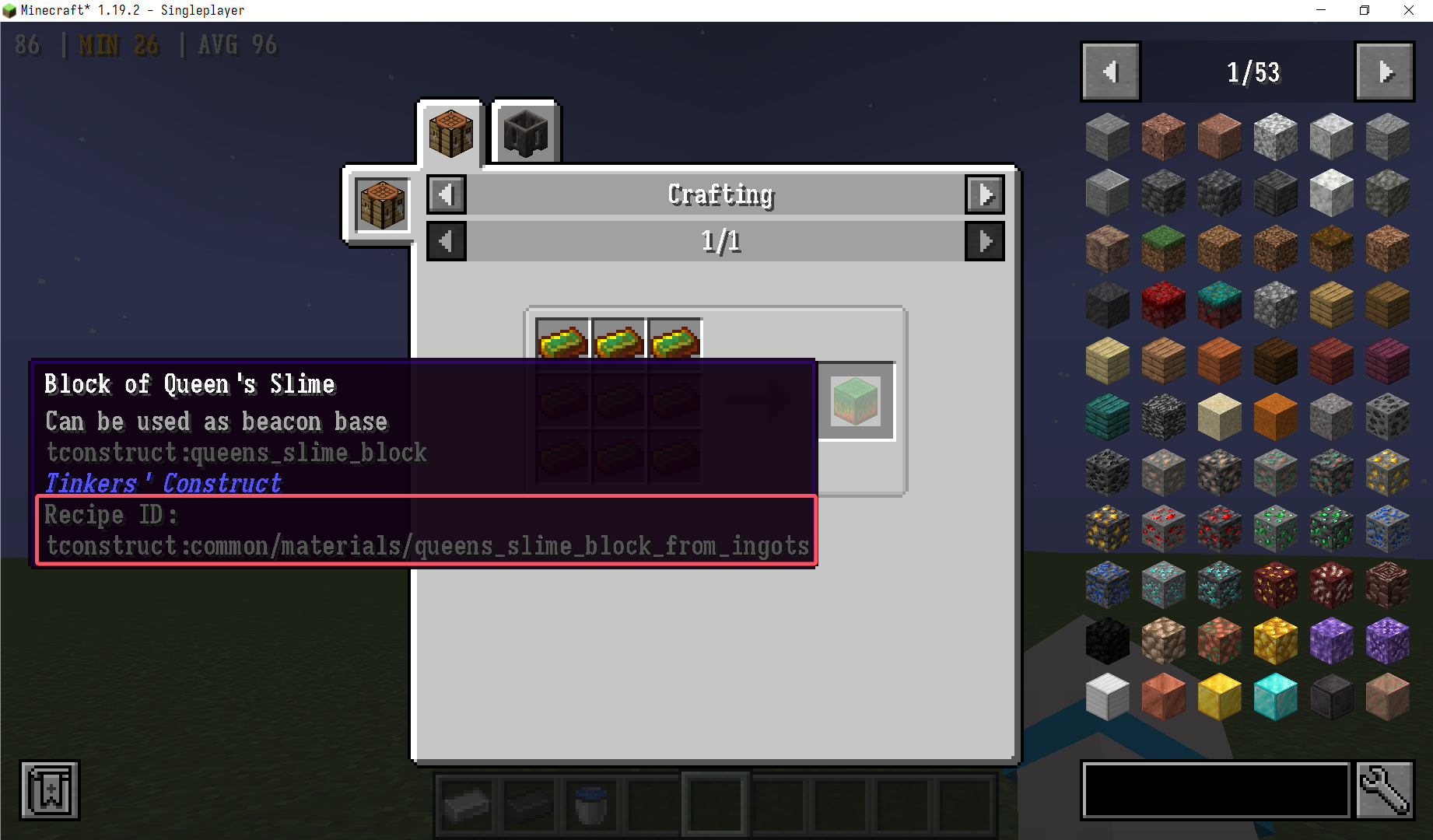
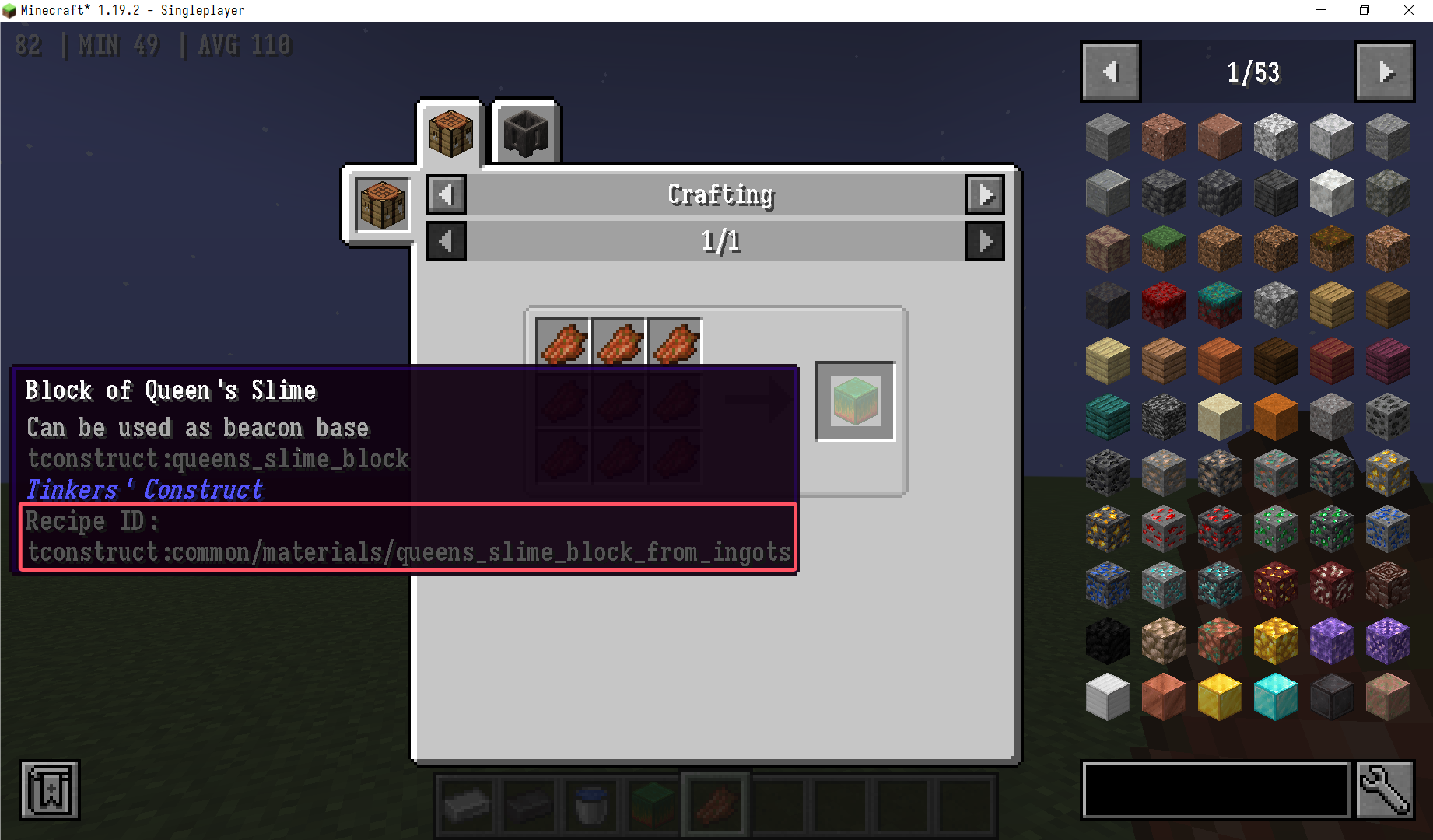
- When writing a recipe, if you append
.id()with an existing recipe ID, it will directly override the original recipe.
jsServerEvents.recipes((event) => { const { kubejs } = event.recipes kubejs.shaped('tconstruct:queens_slime_block', [ 'RRR', 'RRR', 'RRR' ], { R: 'minecraft:rotten_flesh' }).id('tconstruct:common/materials/queens_slime_block_from_ingots') })Before
 After
After
- Writing every recipe as a separate JSON can be tedious and hard to manage. You can also find the recipe file by ID, then copy its JSON content into
ServerEvents.recipeswithcustom, for example:
jsServerEvents.recipes((event) => { event.custom({ "type": "createmetallurgy:casting_in_table", "ingredients": [ { "fluid": "createmetallurgy:molten_gold", "amount": 90 }, { "tag": "forge:plates" }, ], "results": [{ "item": "createmetallurgy:graphite_plate_mold" }], "processingTime": 90 }) })- When copying a recipe JSON, make sure to include the outer
{}as well. - Also,
customcan override by recipe ID too, same as above, by appending.id().
- When writing a recipe, if you append